Balinese Cats A Cat Profile
History
Balinese Cats are Longhaired Siamese and as such, have their origin in Thailand, not Bali as the name might have you believe.
Siamese cats often produced offspring with longhair which were considered undesirable and hence quickly sold as pet-quality cats. Breeders were not sure if this longhair was a spontaneous mutation or whether it was as a result of an earlier out-crossing with a longhaired cat such as the Angora. In the 1950's an American breeder, Marion Dorsey, took a keen interest in these Longhaired Siamese and started line breeding with her longhaired Siamese cats.
Helen Smith, another breeder from the USA, followed in Mrs Dorsey's footsteps in the 1960's. Mrs Smith is also credited with naming the cat. These graceful cats reminded her of the elegant temple dancers from Bali, and in an attempt to retain some of their Asian roots, she called them Balinese.
Mrs Dorsey sold her cattery in 1965. The new owner, Sylvia Holland, is credited with advancing the breed and for working with other breeders to further establish the breed. Today Balinese cats are recognized by most major cat registries around the world.
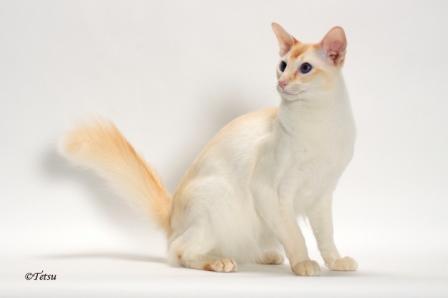
In the 1970's a group of Balinese breeders in America thought it would be interesting to also breed Balinese in Colorpoint Shorthair colors. This caused some decent amongst 'die-hard' Balinese cat breeders as they were concerned that it might cause some confusion and affect the show-status of the Balinese cat. It was finally agreed, that any Longhaired Siamese deviating in color from the four recognized colors (i.e. Seal. Blue, Chocolate and Lilac Point), would be known under a different name - the Javanese cat breed.
Some associations, apart from the CFA, recognize all colors as being Balinese, i.e. there is no distinction between the Javanese and Balinese. In Australia, the Longhaired Siamese is known as an Oriental Longhair. Sorry folks, we know this is confusing!
Features
The Balinese cat breed and Siamese cat are almost identical in terms of features, the only difference between the two is that the Balinese has a long coat. Although the coat is long, it does lie close to the body and it is therefore easier to identify their long, fine-boned body. The body is described as slim and graceful, elegant and muscular. Their tails are thin, long and taper towards the tip. A distinguishing feature of the tail is the luxurious plume. Legs are long and slim and in proportion to their bodies. The back legs are slightly longer than the front.
Their head is triangular in shape, with a long nose. Ears are pointed and large with a broad base and lynx-tip ears. Their oriental, vivid blue eyes are almond-shaped and slant slightly towards the nose. The single coat has silky-fine, semi-long hair which flows backward outlining their shape rather than detracting from their sleek lines.
In terms of color, the CFA only recognize the following four colors. Points are restricted to the mask (face), ears, legs, paws and tail: - Seal Point
- Blue Point
- Chocolate Point
- Lilac Point
Colorpoint colors must be even and show a clear contrast between the points and the background color. As with the Siamese, the kittens are born white and only reflect their mature coloring after about 12 months. The kittens are born with short coats and show no markings.
The Javanese (see above info re Javanese) comes in the following colors: - Solid
- Lynx Point
- Blue Lynx Point
- Blue-Cream Lynx Point
- Cream Lynx Point
- Chocolate Lynx Point
- Lilac Lynx Point
- Lilac-Cream Lynx Point
- Red Lynx Point
- Seal Lynx Point
- Seal-Tortie Lynx Point
- Chocolate-Tortie Lynx Point
- Parti-Color Point
- Blue-cream Point
- Choc-Tortie Point
- Lilac-Cream Point
- Seal-Tortie Point
- Others
If you are in any doubt and need to have a thorough understanding of Balinese cats and Javanese standards pertinent to your country, contact the all breeds of cat governing body, association, or federation in your country.
Personality and Temperament
A lively, active, curious extrovert. Playful, loving and affectionate cats who adore their people! Despite their roots, those in the know tell us that the Balinese is less vocal than their 'parent-cat', the Siamese. They are intelligent and inquisitive and adore hunting. For this reason, they prefer an enclosed safe garden to explore. But don't despair, provided they have company, they do adapt to apartment living!
Cat Grooming
Balinese cats do not shed much hair, and the other good news is that despite having long hair, they have no wooly undercoat, so no excessive grooming is needed. We would describe it as a medium-maintenance cat breed. Bathing us not often required. A Show Cat should be bathed a week before show day to allow the coat to recover its natural oils. Whilst cats do their own grooming, good cat care means a weekly brushing or combing to maintain a healthy coat.
For additional Balinese Cat information please visit our cat fact pages: Balinese Cat - fast facts Javanese Cat - fast facts
Return to Types of Cats
Return from Balinese Cats to Cat Breeds Home Page
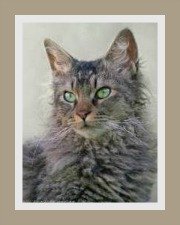
Top Cat Picture provided by:
Author: Angelica Andersson, Cat: Balinese Female. www.commons.wikimedia.org Under the GNU General Public Licence. Source: www.coralreefs.se Middle Cat Picture provided by: Lorna Dawn Friemoth of NuDawnz Cattery Japanese & American Bobtails, Colorpoint SH, and Exotics GC/BW/RW NuDawnz Time Bomb, red lynx point Balinese. Photographer: ©Tetsu
|