Cat Dental Care
and
Cat Ear and Nose Care
Cat dental care is as important as oral hygiene is in humans.
Cats have deciduous teeth (i.e. 2 sets of teeth). This simply means that their 'baby' teeth are lost and replaced with adult teeth when the kitten is about 4 months old.
feline teeth problems
These 30 adult teeth are predisposed to a number of problems like:
- plaque on cat teeth (a yellowish dis-coloring of the teeth caused by bacteria)
- tartar (this is hardened plaque)
- gum disease (gingivitis)
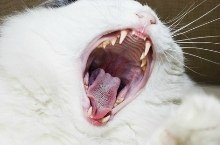
healthy cat teeth
teeth care is important
Cat teeth cleaning is important to ensure healthy teeth and gums.
A good set of teeth should be white and the gums moist, shiny and pink.
Poor cat teeth care will result in:
- painful gums and
- tooth decay
and
- this in turn results in poor appetite and nutritional problems.
cat dental care tips
It's important to start cat teeth care from kittenhood so that your kitten becomes familiar with the routine.
It is extremely difficult brushing your cat's teeth if it is not accustomed to it.
If possible, brush your cat's teeth daily, failing this, a good brush once a week should be effective.
It is highly recommended that you consult with your vet for bi-annual dental check-ups and plaque and tartar removal.
Cat dental care is essential as your cat can't brush its own teeth, it is your responsibility.
Today, manufacturers of specialized cat foods produce pellets that are designed to clean teeth and maintain healthy gums.
Some cat treats are designed to assist with removing plaque on cat teeth. So look out for these when shopping for cat food and cat treats.
Nothing replaces a good teeth-brushing, so be sure to purchase a specialized cat toothpaste and brush at your pet store or veterinary clinic.
Cat toothpaste is available in fish and meat flavors which are highly palatable and helps improve compliance.
Note: Human toothpaste should not be used for cats due to the high foaming action and mint flavors.
If your cat has bad breath don't assume it is poor dental hygiene.
It could be:
- tooth decay
- gum disease
- symptomatic of a more serious cat illness like feline diabetes, liver disease or gastrointestinal problems.
So, if in doubt talk to your veterinarian.
It's never too late to start cat dental care.....prevention is better than tooth decay!
cat ear health
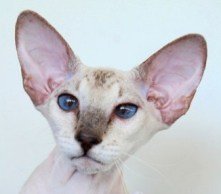
healthy cat ears
If your cat is not scratching its ears excessively, if there is no tilting of the head or no abnormal discharge, there is no reason to be prodding in its ears.
Should these signs and symptoms be present, it's safer and preferable to consult a veterinarian for a check-up.
Never stick a cotton bud (Q-tip) into your cat's ear.
Prodding in the ear could damage the eardrum or push an unwanted, foreign object further into the ear also causing damage.
So the general rule is, if you don't know what you're doing, leave the cat's ears well alone.
You do need to check for cat ear mites every time you groom your cat and if present, speak to your vet or cat health care professional, who will prescribe the necessary medication.
The ear lobes can be wiped with cotton wool swabs that are slightly
moistened with clean, luke-warm water to remove any dirt, grit or
excessive wax build-up.
cat nose care

healthy cat nose
A routine check of the nose to ensure that there is no nasal discharge will be all that's needed here!
If your cat has a thick mucus discharge, it could be indicative of feline diseases, so do consult with a veterinarian.
Persian cats have short, snub noses and there are few problems associated with it from a hygiene perspective.
If your Persian cat has
breathing problems associated with constricted nostrils (see below) please consult a vet.
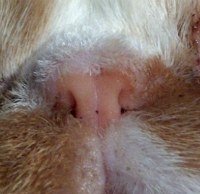
Persian cat with stenotic nares
Related Pages:
Top of Cat Dental Care Page
Return to Cat Care
search our site
please like us
share our site
recommend on google
popular pages