Feline Vaccinations
Objectives, Features and Benefits
what is a vaccine?
Feline vaccinations are preparations that induce or enhance the body's immunity to a particular infectious disease by stimulating it to produce antibodies.
In short, cat vaccines boost the cat's own defense system.
Feline vaccines contain antigens that resemble the micro-organism that cause the disease, so when the vaccine is administered, the cat's immune system will recognize that agent as being foreign and launch a protective reaction.
If the cat is exposed to the specific disease-causing organism in the future, the immune system will be in a position to either reduce the severity of the infectious disease or protect the cat against the development of the disease or infection.
objectives of feline vaccinations
The main objective for cat vaccinations is to provide kittens and cats with immunity against the most common and serious infectious cat diseases.
- Cat vaccines should be administered to all cats that present a threat to the general health of the public and cat population.
- All cats that are at great risk of contracting infectious diseases should be vaccinated i.e. shelter cats, cattery cats and cats in multi-cat households.
Note: As there are risks with vaccines, feline vaccinations should not be administered more often than recommended.
Cats should only be vaccinated if the benefits far outweigh the risks.
factors
that influence vaccine efficacy
A cat's response to vaccination may be negatively impacted by a host of factors:
Ideally feline vaccinations should only be given to healthy cats.
Vaccination should be avoided in cats with pre-existing or acute illnesses or high temperatures.
- In cases where there is a high risk of
infection the veterinarian will do a risk-benefit assessment and in many
instances vaccines will be indicated.
The safety of vaccines in pregnant queens has not been established and should be avoided.
- There are circumstances when the vaccination of a pregnant cat is essential. This will be determined by the veterinarian who will, in all likelihood use a killed vaccine.
Whilst feline vaccination is not contra-indicated in lactating queens it may result in undue stress to the queen and affect the production of milk.
- Vaccination should possibly be avoided.
- In shelter environments
it may be necessary to vaccinate lactating queens as the benefits may
outweigh the risks.
- This will be determined by the veterinary
practitioner.
Certain pedigree cat breeds may have an increased propensity for adverse reactions to vaccines.
- There is insufficient scientific data to confirm this.
- Pedigreed cats are more likely to be vaccinated than mixed breeds and
owners of pedigree cats are more likely to report cases of adverse
effects - this may account for the belief that reactions to vaccines may
be breed specific.
- Having said this, there may be cat breeds that are
prone or inclined to having negative effects to feline vaccines.
It is suggested that cats that are receiving corticosteroid treatment should not receive feline vaccinations as corticosteroids reduce the activity of the immune system
types of vaccines | killed and modified
killed / dead (or inactive vaccines)
As the name implies these feline vaccines contain micro-organisms that were initially virulent, but then rendered inactive by various processes.
As a result of this an adjuvant or drug enhancing agent is added to assist or enhance the immune response and the formation of antibodies.
Killed vaccines are less effective than the live vaccines and more frequent boosters may be required.
There is some evidence that they are associated with local injection site inflammation and possibly vaccine associated sarcomas (VAS).
The benefit of a killed vaccine is
that they can be administered to immune compromised cats as they cannot
cause the disease which the vaccine is designed to prevent.
modified live vaccines (mlv)
These are possibly the most common cat vaccines used.
MLV's contain attenuated or a virulent organisms (i.e. a bacteria or virus in a weakened form).
Modified live vaccines have the capacity to stimulate a stronger immune response than the killed vaccines.
They create immunity which resembles that induced by recovery from a natural infection of the disease.
MLV should not be administered to cats with a compromised
immune system as it may cause the disease
routes of administration
Feline vaccininations can be administered via 2 main routes.
These routes have been evaluated and approved to provide optimum immunity:
Injection
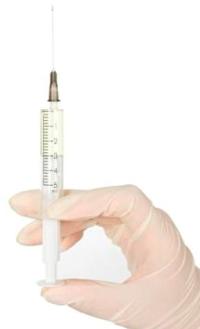
The injectable form is the most common and can be give subcutaneously (S/C) i.e. into the fatty layer just under the skin; or intramuscularly (IM) i.e. directly into a muscle.
Intra-Nasal
This cat vaccine is administered via the nostrils into the highly vascularised mucosa of the nasal cavity.
Top of Feline Vaccinations
Return to Cat Vaccinations
search our site
please like us
share our site
recommend on google
favorite pages